
A+ Strategies for Today's Economy


Episode Summary
Presented by Affinity Plus Federal Credit Union
In this insightful and approachable episode of A+ You, hosts Danielle Johnson and Amber Shanley are joined by Kotchi Prosper, Director of Investment & Retirement Services at Affinity Plus Federal Credit Union. From laughs over spilled coffee to smart savings strategies, the conversation makes financial planning feel less intimidating and a lot more human.
Kotchi shares his unique personal story (spoiler: he’s never had coffee!) and breaks down the role of the Investment Center at Affinity Plus. He explains how their advisors work hand-in-hand with credit union staff to support members’ goals—whether that’s saving a few dollars a month or preparing for retirement.
Listeners will learn about:
- What an investment advisor really does (no suit required)
- Why market volatility is normal—and how it can work in your favor
- The power of habits in financial success
- Investment tips for beginners, including how to start with as little as $5
- A sneak peek at Affinity Plus’s upcoming DIY investing app
- The benefits of 529 college savings plans—and why your retirement should come first
Whether you’re just getting started or rethinking your approach, this episode offers calm, clarity, and a little humor along the way. No pressure, no fees—just helpful, human advice.
Episode Transcript
Introduction
[00:00:00] Danielle:
Welcome back to the A+ You Podcast, brought to you by Affinity Plus Federal Credit Union. I'm your host, Danielle Johnson,
[00:00:06] Amber:
And I'm your co-host Amber Shanley.
[00:00:08] Danielle:
Amber your shirt's really nice today.
[00:00:10] Amber:
Thank you.
[00:00:11] Danielle:
I got a text earlier today when I was preparing, doing my prep work that said: "Just kidding. I'm not wearing the shirt we talked about because there's coffee all over it now."
[00:00:21] Amber:
Yes. A lot of coffee. I smell delightful.
[00:00:28] Danielle:
Actually, no, you really do because coffee is like my favorite thing in the world.
[00:00:31] Amber:
Yes.
[00:00:32] Danielle:
It's like there's not blood in my veins. It's coffee.
[00:00:34] Amber:
Oh. I'm down. With hazelnut creamer, though.
[00:00:37] Danielle:
Just- So, you're like a mix.
[00:00:40] Amber:
Yes. And sometimes I like coffee with my creamer.
[00:00:43] Danielle:
Oh, well
[00:00:43] Amber:
Today I was full blown coffee. All over me.
[00:00:46] Danielle:
All over you. So it wasn't even like, it wasn't like cream today, like a cream color. It was like, brown...
[00:00:52] Amber:
Oh, it was everywhere and my purse probably still has coffee in it. Gonna be a delight to find later.
[00:00:58] Danielle:
You know what? People can relate to that, Amber. We've all had the coffee.
[00:01:02] Amber:
I thought I had a lid. I didn't.
[00:01:07] Danielle:
Well, you know what? I think no one cares if you show up with coffee all over your shirt next time.
Meet our Guest: Kotchi Prosper, Director of Investment and Retirement Services
[00:01:11] Amber:
Hey, I'm just keeping it alive one day at a time with my coffee cup. Okay, so Danielle, now that I'm here in a clean shirt I can introduce our guest for the day. And our guest today is Kotchi Prosper, who's our Director of Investment and Retirement Services with Affinity Plus. And through this we're gonna talk investment center items and maybe some market related items because we have an expert on the show. Right Danielle?
[00:01:39] Danielle:
Yeah. Kotchi, welcome.
[00:01:40] Kotchi:
Thank you. Thank you for having me. Your first title of 'coffee with Kotchi;' I don't know if to be the best title 'cause I've never had coffee. I've heard you guys gushing over how good coffee is-
[00:01:49] Danielle:
What?
[00:01:49] Kotchi:
Never had it.
[00:01:51] Amber:
Do you like tea?
[00:01:52] Kotchi:
Do I? No, I know-
[00:01:53] Amber:
Soda?
[00:01:53] Kotchi:
As a foreigner, you probably thought I'm a tea guy.
[00:01:56] Danielle:
Oh, hang on. So you get up in the morning and you're like, "I'm awake."
[00:02:02] Kotchi:
You know what? People laugh at me and I think my wife has laughed at me. No alarm clock, no coffee. I just wake up and then I just go.
[00:02:10] Danielle:
Okay. You are already the most fascinating person I've ever met.
[00:02:13] Amber:
What? What's your morning beverage? So first thing you drink in the morning.
[00:02:16] Kotchi:
Water.
[00:02:17] Amber:
Water, okay.
[00:02:17] Kotchi:
Water. Yep.
[00:02:18] Amber:
Flavored? Lemon?
[00:02:20] Kotchi:
Nope, water.
[00:02:21] Danielle:
Literally, my mind has blown right now.
[00:02:24] Amber:
Your entire life.
[00:02:26] Danielle:
You've never-
[00:02:26] Amber:
I'm like-
[00:02:27] Kotchi:
I've never had coffee in my entire, yeah- in my entire life. I've never had coffee.
[00:02:31] Amber:
It's not like new. It's just always been - just nothing in the morning. That's amazing.
[00:02:36] Kotchi:
Not a caffeine person. Water is my drink. And then old fashioned's.
[00:02:52] Danielle:
I mean, yeah.
[00:02:54] Amber:
After the water
[00:02:55] Kotchi:
After the stock market is closed: Old fashioned's .
[00:02:43] Amber:
There you go. Good way of timing. See. You don't even have to have an alarm clock for that.
[00:02:47] Kotchi:
Right.
What is the Investment Center?
[00:03:06 Danielle:
Literally. So my mind is going to be completely blown this entire episode. I can already tell. Wow. Okay. I think the first question is. Like Affinity Plus Federal Credit Union, we help people with their banking needs. We think of like a checking account, a savings account. But Kotchi , you're the director of the investment center.
[00:03:27] Kotchi:
Yeah.
[00:03:28] Danielle:
What is the investment center?
[00:03:29] Kotchi:
Yeah, so you're right. The credit union does traditional banking services, right? Taking deposits, lending, and traditional banking services, wiring and all those things, providing checks. If people still use checks, that's a thing. We want to be an extension of that, right?
We wanna think of people as we're gonna help members throughout their whole life, right? So they're gonna work with the credit union to do the lending, the budgeting, and then we come along to say, "Hey, let's start dialing in your financial plan." What are your short-term goals? What are your long-term goals?
And it is facilitated by us in the investment center who are licensed individuals, right? We're licensed to offer you stock market products, whereas lending services and all those things can be done through the credit union. You're gonna switch over when you're ready to start looking at really more long-term goals with us, right?
Market related investments, insurance products, estate planning. So what I love at the credit union, it's, its great partnership is like we have. The solutions for every member, right? We can help you out. Sometimes it's fulfilled by the investment center and sometimes it's fulfilled by the credit union, but it's what a great partnership.
[00:04:36] Amber:
I think that's the key to what you just said is it's a partnership because our member advisors, our employees down in the credit union refer over to the investment center, but also the investment center acknowledges when a member should be working with the credit union versus the investment center based off their goals.
[00:04:55] Kotchi:
The best part about this is, so I've been to the credit union 20 years now, so I've been an advisor 25 years, but I think about when I was not at the credit union. As a financial advisor, you kinda wanna be the quarterback of that person's life, right? But when you were as an independent financial advisor, it stopped the minute the appointment's over 'cause you would send them away and say, Hey, figure out your mortgage over here, switch your money market, do all these things that we have to trust that they're gonna do at their financial institution.
But as an advisor at the credit union, it's great. 'cause then I can say, let me walk you out here into the lobby, or I can partner with someone at the credit union and I'm gonna execute it all. So I have the resources to execute everything in your life. With that partnership with the credit union. So this is such an advantage to be inside an actual bank or credit union, whatever it may be.
[00:05:44] Amber:
And with that, we have advisors all across the state. How many are, there again? Is it seven?
[00:05:50] Kotchi:
10.
[00:05:50] Amber:
I was so close. Crushing it all day. Danielle,
[00:05:54] Kotchi:
You got it
[00:05:54] Amber:
All day.
[00:05:55] Kotchi:
You got it. Yeah.
[00:05:57] Amber:
7, 10...
[00:05:57] Danielle:
10 across the state. So it doesn't really matter where you are located, you can work with one of our advisors in the investment center.
[00:06:06] Kotchi:
Absolutely. Yeah. Whether you're in Mankato, Rochester, or if you're up on the Red Lake reservation, we will find somebody to cover that area for you.
[00:06:16] Amber:
So Kotchi, it doesn't matter if it's in person or virtually because that's something that was, that's newer to our investment advisors. Where they can meet with members wherever they are, whether they're at their home or coming into the office. It doesn't matter. It's catering to where a member wants to be served.
[00:06:33] Kotchi:
Yeah. It sounds weird to say this, but Covid did some... good things? I wanna be careful... before things come flying at me and boo's are throwing at me. But it changed our business model a little bit, right? In the credit union, we had to adjust. In the investment services, we had to adjust too, and we're such an archaic industry. Investments are just like, here's how it is. You only can do this, you gotta do this. But finally people were like, Hey, we could do Zoom.
We can. We can do WebEx, we can meet with our members. And it can go where they wanna do it. How do you want to, how do you want to interact? Do you want to come in or maybe you don't wanna come in, maybe you just want to do this virtually and stay in your home? My documents are at my house.
Sometimes people would miss meetings because, hey, I gotta navigate traffic. And now it's Hey, I'm just gonna hop on and visit with my financial advisor right on my computer. Covid [00:07:00] or the pandemic helped change models sometimes for the better.
What is a financial advisor and what can they help with?
[00:07:31] Danielle:
So when you say financial advisor, I think that is a phrase or like a title that people are very intimidated by, right? Oh, you have a financial advisor. See, it sounds so like-
[00:07:46] Amber:
I get to say I have a financial advisor.
[00:07:49] Danielle:
But break that down a little bit and kind of talk about like. Why it shouldn't be this, or why it's not this kind of "study," "financial advisor" kind of title.
[00:08:02] Kotchi:
It feels like we're gatekeeping information, doesn't it? Like you people with the financial advisors? No. I want to think up more as like a trusted partner. You have some goals. You need to put 'em on paper or get 'em out to someone who's gonna keep you accountable, for the goals you have, right? And someone who can really help you efficiently meet those goals.
So don't think of as financial advisor as more this person. I'm gonna go in and I, I better dress nice. I better have all my stuff together. I better know what all my goals are. Think about it as someone who wants to partner with you and what you're trying to do in your life, right? And ask that person, Hey, what is the most efficient way for me to reach my goals?
And that's how I want to think about as more than the person you meet in this office with a suit on, and all buttoned up. But it's more or less someone who's gonna hold you accountable to the things you're trying to do and help you get there the best way possible.
[00:08:58] Danielle:
So when you say goals, we're talking retirement, we're talking saving for college, or are we talking, are we talking long term, short term? All of it?
[00:09:08] Kotchi:
Hit me with all of it.
[00:09:09] Danielle:
Okay.
[00:09:10] Kotchi:
I'll figure out the resource even if it's not fulfilled by me and it's fulfilled by a member advisor, we're still working on your goal, right? You might have a cash management goal. You might say, I've always wanted to have three months of my expenses saved up.
I'm not, probably not gonna help you with that necessarily through the markets, but we'll figure out the right money market for you and at the credit union, we'll figure out how to maybe automate it, make it automatic, set up a direct deposit with your employer to help you reach that first goal of having three months of my expenses done.
So it could be as simple as that to as complex as you said, 'Hey, how do I plan for my retirement? How do I leave my assets to my kids? How do I leave my cabin to my kids most efficiently?' It can go that complex, but remember, it can be just as simple as I'm gonna have my first thousand dollars saved.
Your goals evolve, Affinity Plus grows with you
[00:10:00] Amber:
The beauty of that is the partnership between the credit union and the investment center and being able to see members reach step one of their goal, or step five of goal number three, because the goals are never ending, if you will. Like they, one goal is achieved and then the next goal starts.
[00:10:17] Danielle:
Well and they evolve.
[00:10:18] Amber:
Yeah.
What is Market Volatility? Can it Help me?
[00:10:19] Danielle:
Your goals evolve as you reach- as you reach your goals, right? Let's take that and kind of transition into, I think what everyone's been talking about, what everyone's been a little bit afraid of is this market volatility. So how when you're meeting with members and people who are trying to meet their long-term goals, short-term goals, what are you telling them about the market kind of volatility right now?
[00:10:50] Kotchi:
Yeah. I say it's natural and I know what everyone wants to say right now. "No, it's because of the things that are happening," or my favorite line is, "but this time it is different." It's a different circumstance, but market volatility is super normal, so I'm gonna put it this way. Nobody ever thinks about this, but in any given year, the market's down on average, 14%. Most people don't think of that all at all. They think about where the market finishes at the end of the year. So we go, last year market was up 20%. Great year in the market. That's all I can think about. But at some point during the year, the market was potentially down 14%.
You might have noticed, you might not have noticed, but you noticed what the end result was. So market volatility is very normal and it presents really great opportunities for us. When the market is down. So what I always suggest is you have to always keep buying. So there's a little thing we say in the, in our industry, it's called dollar cost averaging, right? And you do this every day through your 401k because how often do you guys purchase funds during your 401k
[00:11:58] Amber:
Twice.
[00:12:00] Kotchi:
Twice a month.
[00:12:01] Amber:
Yep.
[00:12:01] Kotchi:
That's dollar cost averaging. Danielle's like-
[00:12:03] Danielle:
I'm so glad you guys knew that.
[00:12:05] Amber:
See, biweekly is the correct answer.
[00:12:08] Danielle:
I'm learn, I'm learning so much. No, keep going, Kotchi.
[00:12:11] Kotchi:
Yeah, and that's it. That's dollar cost averaging. I am buying every two weeks and that means I'm gonna get different prices. Some are high, some are low, but it's gonna average out to a certain price. So when there's volatility in the market, I actually cross my fingers and hope my 401k contribution is going in close to that time, because that means I'm gonna get it at a cheaper price.
So volatility's normal. Embrace volatility and just say, "hey, if the market just went up, that means every time I buy, it's more expensive. More expensive. I need sometimes for it to go down so I can get a cheaper buy." But it feels painful, right? The old saying is, what's more painful? To lose a dollar or make a dollar? Lose a dollar.
[00:12:59] Danielle:
I was gonna say-
[00:13:00] Kotchi:
You're both looking around what is,
[00:13:01] Danielle:
I'm like the obvious answer is to lose.
[00:13:03] Amber:
Is it rhetorical? Am I supposed to answer?
[00:13:06] Kotchi:
Yeah, answer. We should have a back and forth. But no, and I always tell people, here's the deal is yes, I'm a certified financial planner, but one of my designations is a behavioral financial advisor. I use that designation; sometimes I feel way more than my CFP. Which it's the gold standard. Everyone talks about a CFP. But the BFA-
[00:13:28] Amber:
what is a CFP?
[00:13:29] Kotchi & Danielle:
A Certified Financial Planner.
[00:13:31] Amber:
I just wanted to make sure that it was still defined. Okay.
[00:31:31] Kotchi:
It's still there. But the behavioral financial advisor designation Is really critical because that talks a little bit about how you handle your money, how you feel about money, what are the money lessons you learned in your life. We could have a whole podcast of you guys telling me about money: learning lessons you got from your parents, or things that happened in your life that really ingrained a thought about money in your life.
[00:13:58] Amber:
Oh, we sure can. I can tell you about paying bills on Sundays with some coffee and cigarettes. Not mine!
[00:14:07] Kotchi:
But you saw one of your parents do that every Sunday?
[00:14:07] Amber:
Yeah, every Sunday.
[00:14:10] Kotchi:
Okay. What'd that teach you?
[00:14:12] Amber:
It taught me how to balance a checkbook. And why it was important to know what's in your account . And then sometimes it was, take some of that off so you have it for savings.
[00:14:20] Kotchi:
Yeah.
[00:14:21] Amber:
Pretend it's not there.
[00:14:23] Kotchi:
It's amazing, right? How you remembered that. Yeah. And that dictates a lot of your decisions around money. I'm married to someone who has one very frugal parent. And one parent who's a big time spender. And it's amazing to think when you have multiple kids, one of the kids might lean towards one side or the other. In the relationship I have, definitely happened. And that money lesson, that person picked up from their parent guides them throughout. I just find all that very interesting.
And success when it comes to investing in finances is more habit than anything. It's truly habit. People think the best people, when it comes to handling money, are the people who understand the stock market. No, it's the people who have the best habits, right? They're the people who don't live beyond their means. The people who have a plan for their paycheck, when they get it, they know, here's my certain percentage I'm gonna put aside for myself, certain percentage I'm gonna save, this is the certain amount of money I can use for my wants, right? I can use this money guilt free and buy whatever I want. But those people who have those kind of habits - built in money habits, or they've worked on getting them, are usually the most successful.
[00:15:40] Danielle:
That's a really interesting perspective. I even feel a little bit better talking about like market volatility is normal. We like to use the word normal on the podcast.
Money in the stock market is long-term
[00:15:53] Amber:
Well, and I think even just the calm, confident way that you're socking through that it's also puts it at ease a little bit because I think it's easy to be nervous about what's happening in the market day to day, If you keep looking. Like there, there could be some feelings of anxiety or feelings of excitement, if it's going up. You never know. It's, and it's finding that balance. And I think that's what you're cultivating right now is just like: things go up and things go down. It's okay. It's normal.
[00:16:21] Kotchi:
Yeah. And tie your money to a goal, right? So think about this: Amber's thinking to herself, "hey, I got 25 years before I retire, right?" Do I care what happens in the market today? Probably not. My goal is 25 years away, and that's how I want you to think about your money in the stock market.
Money in the stock market has to be long-term dollars. So you really put outta your mind what's happening. You just make sure, am I maxing my Roth? Am I maxing my 401k? What's my plan? Which one of those two am I gonna max? Am I maxing both? That money's for the long term. I don't care what happens in the market. If the market goes down, I get a cheaper buy.
But if it's short term money, now, anything that's five years or less, that's when you get nervous. If there's money you need in the next five years, that money probably shouldn't be in the market. It should be somewhere with the credit union, should be in a cd, should be somewhere in more liquid place. 'cause that way then you say, I don't care what's going on with the market. That money's for me for later in the future. The money I'm gonna need in two years to buy my car, put down on a home. Maybe you're about to retire, in a few years. Have that money ready for your first three years of retirement in cash.
[00:17:36] Amber:
I love that you talked about like me being not new to investing, but not towards the end of my goal of- towards retirement. But what would you say for that? Someone who's maybe new to the investment world?
[00:17:49] Kotchi:
Someone new to investing. I think the first place to start is with a plan. I always find it interesting that most people have spent more time planning a vacation.
Have you guys ever went on a big trip?
[00:18:01] Amber:
Yeah.
[00:18:01] Danielle:
Yeah.
[00:18:02] Kotchi:
Where'd you go?
[00:18:03] Amber:
Which one?
[00:18:05] Kotchi:
OKAY Amber...
[00:18:07] Amber:
I live to travel. That is my jam.
[00:18:08] Kotchi:
Yeah. Okay. So your biggest trip, Danielle or you, or you whoever. Biggest trip.
[00:18:13] Danielle:
I went to Punta Kano.
[00:18:15] Kotchi:
Okay.
[00:18:16] Danielle:
It was amazing.
[00:18:17] Kotchi:
I love it.
[00:18:17] Amber:
I went to Europe.
[00:18:18] Kotchi:
And You went to Europe?
[00:18:19] Amber:
Yeah.
[00:18:19] Danielle:
Oh, I went to Europe too.
[00:18:20] Amber:
Oh, see? Use Europe.
[00:18:21] Kotchi:
Multiple countries in Europe.
[00:18:22] Amber:
Yeah.
[00:18:23] Kotchi:
Okay. So I'm gonna pick on Amberon this one. How long did you plan that year? Trip?
[00:18:28] Amber:
Oh, that was a good eight months.
[00:18:30] Kotchi:
Beautiful. Now, if I tell you, most people have not planned for their investment or retirement ever. You- You spent eight months planning for a European vacation.
[00:18:37] Amber:
I've read a lot of books.
[00:18:40] Kotchi:
Read a lot of books
[00:18:42] Amber:
I did.
[00:18:42] Kotchi:
Most people just wing it with the thoughts of their retirement. One of the most important things ever to be financially independent by the time you reach whatever that age is, 60, 65, whatever your age is, think about that. You spent more time planning a vacation than you will plan on your retirement future.
So that's where we first have to start. What's your goal? So you're about to be a new investor. What are you investing for? Are you investing to buy a car, buy a house, put kids through college? What's your investment goals? And I always say, start there. Let me know what the goal is. So if you are a new investor and you know what that goal is- now remember I am I five plus (years from goal)?
If I'm five plus, great. I know I probably need to get into the market. So now what are my resources there to get into the market? I can lean on a financial advisor, go see one, but I'm like, no, that person has a suit. Yeah. What we thought about is how do we meet members where they're at? So we thought, hey, let's create a do it yourself investing app where they could get on there and maybe do it their self and get some education right off the bat.
[00:19:49] Danielle:
Wow.
[00:19:50] Kotchi:
Yeah.
[00:19:51] Danielle:
That's pretty cool. If, okay, so this investment app one more kind of like elementary question though. But, can I start- Even, oh, let's say my goal is retirement. Can I start with $10? Do I have to have some like big exorbitant? Do I have to have some big like number, like thousands of dollars to start? Or can I, or does it, can it be smaller?
[00:20:17] Kotchi:
Absolutely. And that's funny you asked that. That was the whole point of our investing app. We set it at $5. We wanted members to be able to, at every level, every social economic class to be like, Hey, if I have five bucks and I've always wanted to buy Apple. Great. I'm gonna use my five bucks and I'm gonna own 0.00-whatever percent of Apple. I can't afford one share at $200, but I got $5. Let me get in on the game. And if you're a person who says, eh, I don't even have that, though. I'm too new to this. I don't know anything about Apple, if that's a good idea. Take your five bucks and do it on a robo platform on the same app where you say, "here's my goals, here's what I hope to do." They'll create the portfolio for you. All you have to do is transfer your five bucks and they'll take care of that based off the questions you answered.
[00:21:08] Danielle:
Oh, when does the app, when is that, when is the app coming?
[00:21:11] Kotchi:
Late summer, we hope. Late summer. We hope late summer. We're right now testing with our employees.
t's also - so here's where I'm gonna brag a little bit - is we are currently testing it in high schools. It has a practice portal because we wanted the ability for people to just get on this app and say," I'm still not sure if I'm ready to invest. Let me practice". So there's a big learning section and learning modules you can go through to learn about investing. And then you can actually click into the practice portal, set up a portfolio, start buying, start selling, seeing live results. Even though it's not live money, we're gonna give you 50 grand off the bat. It's exciting, right? You can start purchasing some stocks, some mutual funds, ETFs, and then see how: you do live actual results, but. The risk is taken out, right? I'm not losing my real money, right? I'm not gaining any real money either. So if you're doing really great, you're gonna be like, oh,
[00:22:05] Danielle:
I wish I had actually done this.
[00:22:08] Kotchi:
I wish I would've actually done this. Like every time I sports bet, I'm like, oh, I should have put money on that game. I knew they were gonna win.
[00:22:14] Amber:
I love the gamification of investments. This is cool.
We meet you where you're at
[00:22:18] Danielle:
Yeah. So we've talked about both instances, right? Like you can go on a video chat, you can come in the office and talk to someone. You can use this really cool new investment app that we're gonna launch. Can you do both?
[00:22:32] Kotchi:
Absolutely. We wanna make sure that- we meet you where you're at. If you're like, I'm just in this mode of doing it myself, but then you get to a point where you're like, 'I'm stuck.' Either my situations became more complicated 'cause life changes. Didn't think we were gonna have kids this early. I came into an inheritance and I don't really know if I can manage this much money or I'm ready to start buying life insurance. How much do I really need? And those type of things. I've gotten a new job. I have a new benefits package, trying to figure out which benefits to use. How do I decide how much to put in my 401k?
There's, at times you might want to just lean on a financial advisor to answer your questions, and we're okay if after you answer your questions, you're like, eh, I have to go do it myself. And I think that's okay 'cause we don't want to gate keep financial literacy. We don't want the few to be able to say, Hey, we understand finance and the rest of you don't have the access that we have.
Let's not gate keep it.
[00:23:33] Amber:
And that's the benefit of being a member is there's no fee to sit down with one of our financial advisors.
[00:23:34] Kotchi:
Absolutely.
[00:23:38] Amber:
And learn. Even if it's doing something different.
[00:23:42] Kotchi:
Yeah. I think that is the big benefit of salaried financial advisors. The way we set up this platform is, hey, those financial advisors can feed their family. They don't have to feel a need to' "hey, you really need to buy a product today, Danielle." Otherwise, it's a waste of the time, right? I could have been making money. No, people need this education, so let's make it so the advisor doesn't feel any conflict. Take the conflicts out.
[00:24:11] Danielle:
So is that something in, in your experience is transparent, and different- that we do things differently, like on a salary versus making money off of transactions.
[00:24:25] Kotchi:
Absolutely. And it, and I think it's came from my journey. When I started in 2000, I was at a great, good firm, good learning firm, but I felt it was too expensive and I felt to create a financial plan, you needed to pay like a thousand dollars for your financial plan. I'm like. How if a thousand dollars is all I had to invest? Now you're taking my investment money just to build me a plan. No let's do it differently. So I was able to help create that here at Affinity Plus; a service I feel is fairer and more in the cooperative model.
[00:24:59] Danielle:
Sure. And it, it gives access to everybody. It doesn't limit your access based on what you come in the door with.
[00:25:07] Kotchi:
Yep. I think about the bigger banks where they have phone lines: anyone under $250,000 doesn't get a live person. You call into a phone line, and once you're over $250,000 in assets, you can have an in-person advisor or virtual call with an advisor, face to face. But imagine having a threshold before I can get financial help. What?
[00:25:30] Amber:
And I believe some of those places also refer to those advisors as wealth management advising instead of investment advising or financial advising.
[00:25:42] Kotchi:
Yeah.
[00:25:43] Amber:
And sometimes titles matter and how people perceive that title to be.
[00:25:50] Kotchi:
Yeah. There's a stigma around the word wealth, right? There really is; it's connotation for every person is a little different. Wealth to me equals wealthy, but I think personal wealth could mean that first thousand dollars, right? Imagine if that's your definition of "I could pay my bills for the next three months. I feel wealthy."
[00:26:10] Amber:
Heck yeah.
[00:26:11] Kotchi:
I feel wealthy,
[00:26:12] Amber:
That's a good day.
[00:26:12] Danielle:
Well, and I just- I don't know- I just think about our membership and I think about who we serve. And for those individuals to be able to come in and say, I'm starting at the... Like I'm starting at the baseline. I don't know a lot what I'm doing. We talked to Anthony, in April about financial literacy and coaching and how we can help there, and it's just this- It's just this amount of resources that we offer our membership. And there's really no barriers, right? We've taken away all of the barriers to be able to be- have personal wealth and whatever that looks like for you.
[00:26:50] Kotchi:
Absolutely. Give them all the access, lower the barriers, lower the threshold. Come in with five bucks. Some of the wealthiest members, clients, and I hate the word wealthy, right? We're using the word wealthy. Some of the most successful people I've ever seen are just down to earth good savers, just flat out good savers. The millionaire next door, right? The person you would never know has millions of dollars because they just live a pretty simple life. They started paying themselves first, 10%, 20% automatically every paycheck, and then one day it just built up.
A funny story for you guys is we have a member, one of my favorite members, he argues with me. I told him the balance on his investment account. He goes, I'm really sorry, but that's not my account. And I, every time I'm like, no, it's really your money. He goes, I don't personally have that kind of money. And I'm like, you really do. But he has social security, lives off his pension. He's thrilled with his life. He has enough money, but he never realized that his money grew that well. Just because he lived a fairly frugal, simple life, but he had great savings habits. Once again, his habits were solid.
[00:28:13] Amber:
I love that. And sometimes when it's outta sight outta mind, you forget about it.
[00:28:18] Kotchi:
Yeah.
[00:28:18] Amber:
Which is nice.
[00:28:19] Kotchi:
He doesn't worry about market volatility. He's experienced it and I don't think he knows he experienced it, but volatility works both ways. He's had a lot of upward volatility in the markets. But every now and then there's some downward volatility for him.
Advice for investors just starting out: Get FOMO
[00:28:31] Amber:
Yeah. So you've talked about the member who didn't realize his portfolio grew while he is enjoying retirement, it sounds. What about, so like back to market volatility? Yeah. Like things can be uncertain at like at any point in time. So if it's uncertain right now, what advice do you give to investors just starting out? Right now, maybe it's a dip in the market and things are a little uncertain.
[00:29:00] Kotchi:
Yeah. Once we've clarified your goal, we have to understand that when the markets go down, that is a good time.
So the first place I start, here's where we start, is do you have access to a 401k? It's our easiest place to go because one, we get free money. Most 401k plans, 403B plans, 457 - depending on who your employer is they'll have a match. And the first thing I really want you to do is get that free money. If they're offering a free match up to 5%, you're putting in 5%. I will fight for that. They're like don't you want me to invest with you? No, I want you. I want you to get this free money. You would never walk by a hundred bucks on the ground and just be like, [00:28:00] somebody else should grab that. It's right there for you to be had. So first start with that. Get that, get the 401k going. Get all the free money you can. And then if the markets are going down, this is the time to up your 401k. This is it. If there's ever gonna be a time where you were like, oh, I've been hemming and hawing about it, this is it. I always say, we know what FOMO is, right?
[00:30:07] Amber:
Fear of missing out.
[00:30:08] Kotchi:
Fear of missing out. God knows, I have FOMO is bad as everyone, but this is the time I want you to get fomo. Don't miss out on this because here's the catch. You guys remember the great recession? 2008. One of the biggest financial crashes we ever had. Most people thought to themselves, 'I'm out. This is too much.' If you decided to get out of the market at that point, and you missed 10 of the best trading days from 2009 till 2020, and you just missed 10 days, you were just unfortunately outta the market for those 10 days, you gave up [00:29:00] 50% of the return over that period. And do you guys wanna take a stab at what the return over that period was? 2009 to 2020.
[00:30:52] Danielle:
Nope.
[00:30:53] Amber:
Math isn't my best.
[00:30:55] Kotchi:
I love that Ambersaid there wasn't gonna be math on this thing. We were-
[00:31:00] Amber:
I didn't know I needed a calculator.
[00:31:02] Kotchi:
Oh my god. It was 528% return.
[00:31:06] Amber:
Stop it. That's not real.
[00:31:09] Kotchi:
Very real. That's what actually what I love about math.
[00:31:12] Danielle:
Math. It's real.
[00:31:13] Amber:
Numbers don't lie.
[00:31:14] Kotchi:
Numbers don't lie. I mean you can paint the picture how you want based off that math, but if you missed 10 of the best trading days of that period, 'cause you got outta the market and you were just like, can't handle this, can't do it. You gave up half of that 528%. Now, if I was great with math, I would've told you what half was right off the bat, but I'm not, I think it's 270% or so. But imagine that is just by you saying, "Hey. I can't stomach this. I don't want to be involved in this." But here's where I say, get some fomo. Don't miss out on that because that's when the [00:30:00] money's really made. So if you're a new investor, who cares where the market is? Always be buying. Always be buying. I think Warren Buffet said it, and I have a bunch of Warren Buffet quotes. If you're a financial advisor, you like, Rolodex Warren Buffet quotes.
[00:32:04] Amber:
I was gonna say, is this a new shirt that we're all going to receive from you? Kotchi, Always be buying: ABB.
[00:32:12] Kotchi:
I don't want you stealing my ideas. Because when my merch comes out...
[00:32:17] Amber:
We had small business- Small Business Week was also in May. So just an idea. Warren idea. Warren Buffet quotes, t-shirts.
[00:32:26] Kotchi:
Warren Buffet quotes. Yep.
[00:32:28] Danielle:
And that speaks to what you were saying before, right? Because if you're investing in a 401k or a retirement plan with your employer. That's long term. So we're putting that money in there. You are thinking about the future, probably more than five years. So that's why you're putting your money in there now. So it has time to Yo-yo. And do all the stuff the market does.
[00:32:49] Kotchi:
Yep.
[00:32:49] Danielle:
For you to come back to in however many years.
[00:32:52] Kotchi:
Correct. The market does two things for you. It helps you beat inflation. Because that's what we're really fighting against, right? I want my dollar today to buy me the same goods and services as it will in 35 years from now, right? If I can afford this dollar to buy X today, this dollar should be able to buy X in the future, right?
So we get into the market to beat inflation, right? And normally inflation we'd say is 3%. I know we hear a lot about inflation these days, but that's the inflation number we use. So we just need to beat 3%. Historically, the market has turned around 8%. So we're keeping up and we're building money. So you want to make sure that I use the market to beat inflation and build that nest egg for me later on.
SEP IRAs, 401Ks, 529 and other Investment accounts
[00:33:36] Danielle:
So let's say I may not have the opportunity to do a 401k, 403B. Are there other- is there a Roth or is there another product that might be similar that I can, invest in, now, that might not be that 401k
[00:33:56] Amber:
Or if you're self-employed.
[00:33:58] Danielle:
Yes.
[00:33:58] Kotchi:
Yeah. There's lots of options out there. SEP IRAs for our self-employed people. The Roth IRA is such a cool account. I hope- People always ask me, will that go away? Because think about it, you put money in there after tax. I wait till I'm 59 and a half and I get it completely tax free. Imagine having your whole retirement sitting out there tax free.
You and the government never have to get involved with each other. You're like, this is my money. I owe you nothing. So it's such a cool product, but remember I have to have earned income to do a Roth IRA. SEP IRA, my business is making some money and there's a lot of IRA options out there: traditional, Roth, SEP for the business owners. But yeah. Really good tool. Now, here's the big difference, right? If we're doing a Roth IRA, I probably only can get $7,000 in there if I'm under 50.
[00:34:46] Danielle:
Oh, that's right.
[00:34:48] Kotchi:
Whereas the Roth, or whereas the 401k, now we're talking $23,005, so I can put a lot of money into 401k, but if I don't have access to it, seven thousand's pretty good. It is a pretty good thing. Every single year I can put $7,000 in there. Yeah.
[00:35:05] Danielle:
So the other thing coming up that I don't know, is a "Holiday."
[00:35:12] Amber:
Holiday in investment world.
[00:35:14] Danielle:
Yes.
[00:35:15] Kotchi:
Acknowledge our holidays.
[00:35:17] Danielle:
There you go.
[00:35:18] Kotchi:
Yeah.
[00:35:19] Danielle:
So it's a 529 day. And so for people that don't know what a 529 is, why don't you tell us a little bit about that?
[00:35:27] Kotchi:
Sure. A 529 plan is an education plan that's usually owned by the parent, right? Usually owned by the parent for the benefit of a child, right? And you can put in a lot of money. You really can put in... really up to a couple hundred thousand dollars in there if you wanted to.
But it's a great way to save for education. Now it used to be you couldn't get a tax deduction, so some people should check that out in Minnesota. Now there is, based on your income levels, you could get a deduction for actually putting money in a 529 plan. But it grows tax deferred. And when you use it for qualified education planning purposes, you get the money. You can pay the tuition tax free.
So it feels like the Roth. You know how we talked about the Roth a little bit? It feels like that, but it's a great tool to save for education for your kids.
[00:36:18] Danielle:
So is it limited to like universities? Could you use it for a trade school, for example?
[00:26:23] Kotchi:
Yeah, as long as the school is accredited. I think there's that movie where they made a fake school.
[00:36:28] Amber:
Yes, they did. They did.
[00:36:30] Kotchi:
What movie was that?
[00:36:30] Amber:
Accepted.
[00:36:33] Kotchi:
So if "Accepted" needs their tuition payment, that might get a little weird. But no, as long as it's an accredited school or trade school. You can definitely use the funds for that. And now they've actually expanded it too. In 2020. They actually expanded to where you can use it through K through 12.
[00:36:50] Amber:
Wonderful.
[00:36:550] Danielle:
Oh, wonderful.
[00:36:51] Kotchi:
So if your, if your child's at a private school, or in-
[00:36:53] Amber:
A tuition based school.
[00:36:55] Kotchi:
There you go. They can use it for that. So it's became really pretty cool. And then there is a little get out.
So now let's imagine you have your child and they end up being this great athlete and you're like, I just saved all this money and you got a scholarship. Now you can take back those funds equal to the scholarship, back to you. And now name your boat "My Kid Runs Track Really Well," or whatever it may be.
[00:37:19] Danielle:
Sure. Okay.
[00:37:20] Kotchi:
Yeah.
[00:37:21] Danielle:
And so you said you, you referenced tuition, but I think, or from my small amount of research - it can be used for books, it can be used for those kind of expenses as well.
[00:37:33] Amber:
Like education based expenses,
[00:37:34] Danielle:
Right.
[00:37:34] Kotchi:
Education based expenses, absolutely. You searching or filling it, finding a service to help you find a college. It's really, as you can tie it back to the college, you can use those funds to pay for those things.
[00:37:47] Danielle:
For that - higher education.
[00:37:49] Kotchi:
higher education needs, and now K through 12.
[00:37:51] Danielle:
Wow. Yeah.
[00:37:52] Amber:
That's awesome.
[00:37:53] Kotchi:
Yeah,
[00:37:53] Danielle:
So it's a pretty versatile product.
[00:37:55] Kotchi:
It became one. It really has. Yeah. The only thing I'll say about that is keep in mind: if you're not funding your retirement? Or if you want, you haven't went through the exercise of really looking at where you are personally with your retirement situation, I'd say maybe hold off on the education planning. 'cause our kids might be able to get financial aid and things like that, but there's gonna be no financial aid for you for retirement. So I'll have parents who are like, Hey, I really want to pay for my kids' college. I love that. I love the fact that you want to give them a headstart on life. But I'm worried about you right now. You're not gonna have financial aid when you get to retirement time, so let's make sure you're solid first before we start allocating dollars on an education plan for your child.
Outro
[00:38:41] Danielle:
I can't think of a better way to wrap that up.
[00:38:2544Kotchi:
Mic drop.
[00:38:48] Danielle:
Kotchi, having you here has been so insightful. I feel like I say that to every one of our guests, but all of our internal-
[00:38:54] Kotchi:
Oh, so you're just saying to me what you say to everybody else.
[00:38:58] Amber:
Kotchi made me do math without a calculator. He tried.
[00:39:03] Danielle:
He tried. I just, I, it's, it is such a pleasure to have all of our internal experts in here just talking about what you do every day and how, how you make it so easy for everyone around you to be an expert, too. So thank you so much for coming in.
[00:39:23] Kotchi:
Thanks for having me. I love this. This is fun.
[00:39:23] Amber:
This was fun. Thank you, Kotchi.
[00:39:25] Danielle:
Thank you. We hope you come back. I'm sure there are other investment holidays we don't know about. Thank you so much for listening. Make sure you tune in next time for the next episode of A+ You.
Video
Meet Your Hosts

Danielle Johnson
Public Relations and Content Specialist
Danielle has been working in marketing and finance more than 10 years. Recently she has been focusing on creating accessible financial educational content, to help anyone understand how finances can empower their life rather than be restrictive. Danielle spends her time outside of work cheering on Minnesota sports teams, traveling, and perfecting the role of family business office for her husband and two daughters.
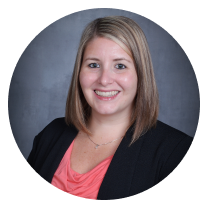
Amber Shanley
Director of Branch Services
She has been working in the branch network since she came to Affinity Plus in 2009. Her passion is helping employees and member achieve their goals. Amber is committed to empowering underserved communities through financial services, education, and advocacy. Amber enjoys spending time as “Auntie Amber” with her many nieces and nephews, and catching sports events while exploring landmarks and cities across the US.