
Getting Back to campus (with a checklist!)


Episode Summary
In this episode, you’ll learn:
💳 How to manage your first bank account like a pro
📈 Simple strategies to build and protect your credit
💰 Budgeting tips (yes, even on a ramen budget!)
🏦 Why an emergency fund is a student’s best friend
🎯 How to set your own financial pace and focus on YOUR goals
Whether you’re a freshman just starting out or a returning student planning for life after graduation, this conversation is packed with practical advice, relatable stories, and a few laughs along the way.
Episode Transcript
Introduction
[00:00:00] Danielle: Welcome back to the A + You podcast. That's your host, Amber.
[00:00:04] Amber: And that's my co-host. Danielle, we're just gonna be silly today 'cause we're we're going back to school.
[00:00:12] Danielle: Oh, girl. Ooh.
[00:00:13] Amber: I know.
[00:00:14] Danielle: That's so good.
[00:00:15] Amber: I try.
[00:00:16] Danielle: Amber, where did you go to college?
[00:00:17] Amber: I went to the University of Minnesota Twin Cities.
[00:00:21] Danielle: Ooh. Look at you. Big fancy school.
[00:00:23] Amber: I really enjoyed my time there.
[00:00:25] Danielle: I bet you did. I believe that.
[00:00:29] Amber: Where'd you go?
[00:00:30] Danielle: I went to River Falls, University of Wisconsin. River Falls.
[00:00:33] Amber: Oh, see, we were close. We just didn't know it.
[00:00:36] Danielle: We were really close. I but small school?
[00:00:38] Amber: Yes.
[00:00:39] Danielle: Smaller like.
[00:00:40] Amber: My school is not small.
[00:00:43] Danielle: My, the whole town of River Falls is probably less than the student population at the U.
[00:00:47] Amber: Yes. But it has grown significantly at the U in the last several years from when I was there.
That was many moons ago.
[00:00:53] Danielle: I mean, it was only a couple years ago.
[00:00:55] Amber: Totally. A couple years ago. How did you know?
[00:00:57] Danielle: Uhh right. You're a new grad.
[00:01:00] Amber: Yeah, totally. Well, sort of. I am a new grad for my MBA, so I mean, technically.
[00:01:05] Danielle: Technically,
[00:01:06] Amber: Technically
[00:01:07] Danielle: You're funny
[00:01:07] Amber: but that was a different school.
[00:01:09] Danielle: You're funny.
Back to School and Introducing Morgan Wuebker, MSU Mankato Member Consultant
[00:01:11] Amber: So with Back to School, we have a special guest, from one of our campus locations because it's important to have an expert on, maybe talk about some other back to school things, a little closer to the subject than maybe.
We were, are at at some point. But our guest today is Morgan - and Morgan, I did not ask how to say your last name prior to this, and I'm going to butcher it.
[00:01:41] Morgan: That's all right. I usually ask people like, how do you say it? So, it's, that's perfect.
[00:01:45] Amber: I'm gonna go, well, I'm gonna go web-cur.
[00:01:50] Morgan: You got it.
[00:01:51] Amber: Yeah.
[00:01:51] Morgan: Way to not overthink it. That's, that's exactly right.
[00:01:54] Danielle: Wow.
[00:01:54] Amber: My maiden name started with a W.
[00:01:57] Morgan: Yeah. Perfect. Yeah.
[00:01:59] Danielle: Oh, that was impressive.
[00:02:01] Amber: You know it's those W last names. I was like, W Nope. I was like, Nope. I don't think the U'S has a sound.
[00:02:06] Morgan: Nope.
[00:02:06] Amber: I'm gonna go with it.
[00:02:07] Morgan: Nope. Not this time. So people always try to pronounce it that, but no, it's, it's pretty easy.
[00:02:12] Amber: I love it. Well, thank you for being here.
[00:02:14] Morgan: Thanks for having me. Happy to be here.
[00:02:15] Amber: Do you wanna introduce yourself? And maybe tell us a little bit about you.
[00:02:18] Morgan: Yeah. So I am Morgan Wuebker, from Affinity in Mankato, work at the MSU Minnesota State University Mankato location, along with our main location down there.
Been with Affinity six years, six and a half years coming up on, so. Member consultant, do a little bit of everything. Help members advise 'em, give them loans. Accounts, all that good stuff. So.
[00:02:46] Amber: Welcome students to campus.
[00:02:47] Morgan: Yes. Yeah. Yep. Students are a big one that's gonna be ramping up here soon. And yeah, it's gonna be nice to see kids on campus again after kind of a quiet summer. So gonna be a lot of fun.
Affinity Plus has Seven Campus Locations
[00:02:58] Danielle: So there are, I guess it's worth mentioning, we have how many,
[00:03:03] Amber: seven,
[00:03:04] Danielle: seven university type branches. So, Mankato, Bemidji. Just see if I can name them.
[00:03:10] Amber: All right, go for it.
[00:03:11] Danielle: Okay. Mankato Bemidji. Morehead. And then Duluth, but it's like the superior.
[00:03:20] Amber: Lake Superior College.
[00:03:23] Danielle: Hang on. Winona State.
[00:03:24] Amber: Yep.
[00:03:25] Danielle: Well, there's two more. Two.
[00:03:26] Amber: Two more.
[00:03:28] Danielle: Okay. Hang on. Saint Cloud.
[00:03:30] Amber: Yep.
[00:03:31] Danielle: One more.
[00:03:32] Amber: Where are we?
[00:03:34] Danielle: Well, the U
[00:03:35] Amber: The University branch. Yeah.
[00:03:38] Morgan: Easiest one for last. Perfect.
[00:03:43] Danielle: We're literally in the branch. That's why I forgot it because I don't, you know, I don't think of it as a campus branch, but it is.
[00:03:50] Amber: It is. And just like even Duluth, outside of Lake Superior College, their Duluth community branch does a lot with UMD. So we like to consider that also.
[00:03:59] Danielle: Like an honorary.
[00:04:01] Amber: An honorary campus branch. Yeah.
[00:04:02] Danielle: Yeah.
[00:04:04] Amber: So that was really good. I'm impressed guys sometimes can't name all seven.
[00:04:07] Danielle: I got you
[00:04:09] Amber: Calling her next time.
[00:04:10] Morgan: I was gonna say I was gonna look it up before I came here, but I forgot. So I'm glad you did it instead of me.
[00:04:15] Danielle: I'm up for the challenge today.
[00:04:20] Amber: Not tomorrow. Don't ask her tomorrow.
[00:04:22] Morgan: Yeah, that's all right.
[00:04:23] Amber: I'm gonna send her a chat.
[00:04:25] Morgan: Yeah.
What is the benefit of a branch right on campus?
[00:04:27] Danielle: So Morgan, I guess why. Why is it important to have a campus branch? Like what is the benefit of having, you know, the, our branches so close to campus and so accessible for these students?
[00:04:38] Morgan: Well, a lot of times it's especially freshmen coming in, they don't have cars on campus. Or in the case of, MSU, we have a lot large international student population and they get right off the plane and they're go through orientation. Then classes start that next week and they don't have cars typically. So being able to have that location for traditional students. Just to come in and be able to actually be in a location on their college campus, whether they're in the dorms, in apartments close to campus, it's a way for them to access it a little bit easier than having to drive 10, 15 minutes away or navigate the public transit or anything. So it's a lot of. Location based and being able to stop in between class and getting help with anything they need.
[00:05:23] Amber: And during welcome, I call it welcome week because that's what it is at the University of Minnesota. Is that what it is at MSU as well?
[00:05:30] Morgan: Yeah. It's like welcome weekend or something.
[00:05:33] Amber: Yeah
[00:05:33] Morgan: It's, yeah, it's always a turnaround on welcome and everything. So Yeah.
[00:05:37] Amber: And welcoming all incoming freshmen, transfer students, international students, everyone kind of just coming in all at once.
[00:05:43] Morgan: Yeah. Yeah. It's a big, big event and they kind of go through the weekend and everything, and they have all sorts of fun events, at least at MSU, and I'm sure all the other locations too, and welcome them, those kids in and having a good time with them.
[00:05:56] Amber: Young adults.
[00:05:57] Morgan: Young adults, kids. Yeah. Young adults. I know. I know.
[00:05:59] Amber: It's a, it's a whole mindset. Mind set, mind shift, change. I'll get it out. It's okay.
[00:06:05] Morgan: Yeah.
[00:06:05] Amber: Mindset. Mindset. That's it. Not mind shift mindset. It's okay. I'll be better tomorrow too.
[00:06:16] Danielle: Okay. So today we're kind of talking back to campus, back to school basics. What we're discussing today is also kind of a resource online. So we have a back to school checklist that we're gonna kind of just chat about today, but it is also, you don't have to write it down or. Rewind, unless you wanna hear Amber's giggle over and over again, but.
Back to School Checklist: Banking Basics
[00:06:39] Morgan: She's trying so hard not to giggle right now.
[00:06:41] Danielle: So hard not to giggle right now. But, we do have resources online for students, but I guess the first one, in our kind of like checklist is banking basics. So tell us a little bit more, Morgan.
[00:06:53] Morgan: Absolutely. One of the big things, especially for students, 'cause being a full-time college student in.
Going and like trying to work. It's not always easy. So being able to have like, a checking account or something that has minimal fees or ways to kind of use your cards and be able to view your accounts anywhere online is gonna be huge because with that, they're gonna be able to not have to worry, add one more stress on to their life.
With school work, it gives them the opportunity to stay up, up to date with their accounts, but then also not have to worry about 'em. In this case, they. Have a miss work for a week or something 'cause they're sick or on a school trip like, or anything like that. So, definitely one of those things where being able to have just kind of basic account needs met is really beneficial for 'em.
[00:07:44] Amber: Yeah. And if they get cash, they can easily deposit it right at our ATM on campus without having to travel. To your point from before of. No access to a vehicle maybe right away that first year, just depending on their individual situation.
[00:07:59] Morgan: Absolutely. Yeah. That, and I mean even depositing the checks or through mobile deposit or through the ATMs as well, it's, that's how a lot of our campus branch are set up now with cash free and everything. So members can go in there and have ATM 24/7, even if we're not there, and then still be able to contact us if they need help through. Mobile app, video banking, or the phone as well.
Helping Students with Financial Knowledge
[00:08:20] Amber: Absolutely. So Morgan, when new students come onto campus, they not only have access to starting that new membership with Affinity Plus, or maybe they have an existing membership with Affinity Plus, but there's a variety of ways that we help students and one of those is maybe creating a budget or giving them the tools to do so. Can you share a little bit about that?
[00:08:38] Morgan: Absolutely. Yeah. The hardest, one of the hardest things is to kind of look at your own finances and go through and see, well, how much am I spending? Especially with debit cards now, online banking. People don't go through their statements as readily as they once did. So us going through, sitting down, kind of giving them them tricks and tips to be able to figure out a way to manage their budget, whether it's like using our online banking, using a third party app, or even like just using good old pen and paper, like a lot of people still like to do that. It definitely helps kind of get them set up because when they are working. With going to school full time, you gotta be sure you're on that budget, otherwise you're not gonna be able to afford things. Fun things like food, grocery, well, food and groceries are the same thing. But food, entertainment. Like other things. 'Cause one thing I figured out years ago, we were kind of talking about like eating ramen.
I love ramen. But if you have to eat ramen three times a day for a year, I had calculated this about, this says May 29th, 2016. So if we were to eat ramen three times a day, your daily sodium intake would be about 55,139 milligrams per day.
[00:09:53] Danielle: Oh my God.
[00:09:53] Morgan: So that's about 2,800, 93 milligrams over recommended amount from the American Heart Association, which is 2300 milligrams.
So over the course of a year, you would've ingested 1,895,445.
[00:10:07] Amber: Oh my goodness.
[00:10:07] Morgan: Milligrams of sodium. So that's a full million 55,945 milligrams more than the recommended amounts. And this is the, about the same amount of sodium as 14.31 gallons of sea water.
[00:10:22] Danielle: My gosh. That is a stat.
[00:10:25] Morgan: At the time it was about $149 spent on ramen for the year.
You'd be eating about 12721.11 milligrams of sodium per dollar spent. So having a budget goes a long way and it helps your heart and gets you a little bit more healthy and stuff.
[00:10:41] Amber: But I think think that's our new, marketing sign.
[00:10:43] Morgan: Yeah.
[00:10:44] Amber: Campus location.
[00:10:46] Morgan: Absolutely.
[00:10:46] Amber: Keep your wallet healthy with Affinity Plus and keep your heart healthy with a budget, right?
[00:10:50] Morgan: Yes.
[00:10:51] Danielle: Keep your, keep your heart and bud like wallet, like healthy.
[00:10:55] Amber: Oh my goodness.
[00:10:55] Morgan: Again, I say I, I love ramen. I got my daughter under Ramen. My wife loves Ramen, so it's not. It's,
[00:11:01] Danielle: it's not a knock on the ramen,
[00:11:02] Morgan: it's still close to my heart. Yeah.
[00:11:03] Danielle: Yeah.
[00:11:03] Morgan: But...
[00:11:04] Amber: Well, and we're talking like the packs of ramen from the grocery store,
[00:11:08] Morgan: The 99 cent pack not, not the fancy like home fresh. Yeah. This instant Ramen and everything. Yep.
New Students are on their own for the first time, and Affinity Plus is here for support
[00:11:15] Danielle: Well, and I guess, you know, you think students, right? This is the first time that they're kind of on their own, right? Maybe not ahead, but for probably, maybe the majority, it's safe to assume the first time that they're on their own, the first time that they're.
Looking at their online banking, or they're dealing with having their own account or, you know, there's a million different scenarios, but this is the first time that they're kind of taking control of that piece of their life potentially. And it's good to understand like where to start. And like we've heard before from other member advisors that have been on here, like your budget is kind of your foundation. Right? And I think. To quote Tony, if you're not budgeting, you're guessing.
[00:11:54] Amber: Exactly.
[00:11:55] Morgan: Yeah. And the nice thing is too, the budget can change. It's not something set in stone. I'm sure everyone else has said that too, because if you just saw, stick to it, try to rigidly say according to the budget, well for one, you're not gonna have fun.
And two, it's gonna feel like a chore when it should just feel kind of fun and be like, okay, where do, what do I gonna do with my money? Do I get to save this month? Do I have to? Have a big expense and it's just kind of a way to kinda see where you can put your money to work.
[00:12:23] Danielle: I think about my college days just a couple years ago and.
[00:12:28] Amber: Absolutely. Yeah.
[00:12:30] Danielle: Shout out to my dad. I got an allowance of $25 or no, $50 every two weeks from my dad. That is what I lived off of.
[00:12:39] Amber: Wow.
[00:12:40] Danielle: I was also an RA, so I got like a small stipend.
[00:12:43] Amber: Nice, okay.
[00:12:44] Danielle: But like 50 bucks every two weeks.
[00:12:47] Morgan: Yeah,
[00:12:47] Amber: There you go.
[00:12:48] Danielle: Best of luck, Danielle. And that is how I got through college.
[00:12:57] Amber: I worked full-time.
[00:13:00] Danielle: I was an RA. I worked full-time.
[00:13:02] Amber: Yeah.
[00:13:02] Danielle: You know.
[00:13:03] Amber: I worked at a gas station.
[00:13:04] Danielle: Look at you.
[00:13:05] Amber: It was great.
[00:13:06] Morgan: Yeah. I had a bunch of jobs,
[00:13:07] Amber: I ate a lot of ramen there. Oh, I know. I shouldn't have.
[00:13:09] Morgan: Right,
[00:13:10] Danielle: You're still here?
[00:13:11] Morgan: Yeah.
[00:13:12] Amber: Well, I should go to the doctor and get a checkup.
[00:13:15] Morgan: I was gonna say, yeah, that was, that was like years ago. So it's like, I know for me, my, my diet was awful. So it's.
[00:13:24] Danielle: Yes.
[00:13:24] Morgan: It's on the past.
[00:13:25] Amber: It's okay.
[00:13:25] Morgan: It's all in the past. Yeah.
Student Checklist: Building Savings Habits
[00:13:28] Danielle: Well, so you know, one of the things I guess you do in a budget is savings. So I will say number three, kind of like on our student checklist is like building savings habits.
So how do you kind of incorporate that into your budget and what does that, what's the easiest way or the best way to do that, I guess?
[00:13:46] Morgan: So, easiest way that I always recommend student members. Members in general, if you're working and have direct deposit, get your savings account account number, and just. Put a certain amount in there each month, whether it's half $50, whatever, just put something in there right away. Because when you get that direct deposit, it's not like you have to, you have, don't have to get over that barrier to be able to transfer in yourself. You can do that either through the direct deposit or you can even set it up through like the online banking to be able to transfer it over. But another cool thing that we have at least is the stash, your cash with the debit card. I always think of it like digital pocket change. Like if you use your debit card for purchases, you're gonna just pay the exact amount. But with Stash your cash, that's gonna round it up and it's gonna put it in the difference into your savings account or whatever account you want, and be able to save up money that way and everything like that. So definitely, definitely good. It's like paying with a, a bill and set, but actually a debit card. So-
[00:14:45] Danielle: I wrote that down. Digital pocket change.
[00:14:48] Morgan: Perfect.
[00:14:48] Danielle: Brilliant.
[00:14:49] Morgan: Appreciate that.
A chance to win money while saving with WINcentive
[00:14:49] Amber: Well, and you can do it into the WINcentive account too.
[00:14:52] Morgan: Yeah.
[00:14:53] Amber: If you, if you have your money, go into, excuse me, the stash, your cash, go into the WINcentive and potentially use that to. Win more money. And that's have a savings that you can't touch.
[00:15:05] Morgan: That's my other trick too.
[00:15:06] Amber: I love it. Tell me more.
[00:15:10] Danielle: Tell me more.
[00:15:10] Morgan: Yeah. So I always, my wife and I have ours set up. We have ours set up in November, and essentially with that we use 'em for gifts in the holiday times and things like that.
[00:15:20] Danielle: So smart.
[00:15:21] Morgan: Yeah. So every November we clear it out and we have gifts paid for and everything, but with WINcentive, well stash your cash into the WINcentive. you need to get $25 for the WINcentive to have an entry into the drawing. And there's the monthly, quarterly, annually, and then like state drawing, Affinity drawings and everything where members have won a hundred dollars, $500, a thousand dollars, $5,000. Like there's a lot of different ways to win, but with the Stash Your Cash connected to that, that's going to build up those $25 in those small increments. And it doesn't matter how you get to the 25. But you're gonna get to that 25 when you use your debit card for purchases. And it's just a way to make sure you're saving, but also keeping yourself a little bit honest. There's a little friction there if you want to try to withdraw with the fee, but we always try to make sure that it's money you don't need because why fee you if we don't have to? Like, it's doesn't make sense to do that in a lot of cases 'cause. If you need your money, it should, should have. It should be stuff you set away for something fun in the future that you are saving.
[00:16:28] Danielle: Brilliant.
[00:16:29] Amber: I love it. Two great tricks that, I will incorporate in other conversations with members and myself at some point as well.
[00:16:38] Danielle: Yeah, for sure. Absolutely.
How can a student build credit?
[00:16:41] Amber: So I think, the next one on our checklist here is just understanding and building credit. So tell us a little bit about that from your perspective when working with students and young adults.
[00:16:53] Morgan: Yeah, as we kinda said, a lot of times this is their. First foray out into the world themselves. what they might do is they might be an authorized user on like a parent's credit card where they're starting to build credit that way. But eventually it's time for kind of them to get on their own and get their own card.
So, so we get started with the Premier Classic card, which is our kind of starter card where we can start with $500 balances and go up from there. And it's a really good opportunity to talk to 'em on how the credit card works and kind of dive into other, other cards or, other loans. Especially like if they're looking for a technology loan, we offer those for students.
Student loans through student choice, we offer those as well. But then also just kind of auto loans and kind of those other fun loans if when they start getting a little bit farther through college or even after college. 'Cause. A lot of kids that I talk to or students that I talk to, they always mention like, Hey, I want to buy a house in the future.
And like, well, this is the perfect time to start. And if they come in and say, well, I don't have any credit, it's like, well, you're a perfect building block. It's a blank slate. You can build all the good habits now and be able to get into those dreams that you have. Especially with kind of the tools that we have in our online banking, whether it's savings analysis or even our credit scoring tool to be able to see kind of where that.
Score is trending and I always make sure to tell 'em it's not gonna be, see what you see in like what we pull, because ours, our monthly score leads our daily score. So it's gonna be a lot different than what you see, but it's a good tool to see kind of where you're at and kind of where you're trending in a way to keep on top of it.
[00:18:31] Amber: So with the credit card, like what are some tips that you have to ensure, like self healthy credit card habits?
[00:18:40] Morgan: Absolutely. My main one. Use it like a debit card. Don't think of it like as extra money. Think of it as money you might have already spent, or think of it like make sure you can pay it off in full each month because that's gonna be the big difference.
'Cause if with the credit card it doesn't accrue interest daily, you only pay interest on balances, you don't pay off. So with that, if you just use it like a debit card, you're not overspending. You're still building that good credit, but you're also not paying any interest, which is the big plus. 'Cause a lot of people get into habits of using credit, paying minimum balances, thinking that's gonna help build credit.
And then they essentially just are paying interest and yeah, their credit's building, but they're not. They're spinning their wheels a little bit more, more so than not, so.
[00:19:24] Amber: And that's a myth of credit building, is that you have to pay interest in order to earn credit.
[00:19:29] Morgan: Yep. It's, yeah, it's pretty easy. Just make your payments on time. Pay like pay off in full, like when you can and stuff and yeah, it'll, it'll build, it just takes time and, and effort. It's, yeah, it's nothing, no quick fix, unfortunately. But a lot of, lot of education around that too, and making sure. Members understand it.
[00:19:49] Amber: Absolutely.
[00:19:50] Danielle: Well, and they're starting like, like you said. Potentially from nothing, right? Or potentially from like ground zero. So it's really all about like educating and making sure they understand like that full credit picture, how to build it, how to maintain it, all of that.
[00:20:03] Morgan: Absolutely.
Building an emergency plan
[00:20:07] Danielle: So we talked about our budget, we talked about savings, and the next item on our list is kind of, building an emergency plan, I'm assuming. Most of the students that we're chatting with, they're in a position where if they don't go to work, they don't get paid. Or, so in that case, they need to rely on kind of an emergency fund or some extra savings, I guess.
[00:20:31] Amber: I, I tend to market so I know what I'm spending my money on. That's, that's my. Nice little piece is I will label it something of like don't touch and like.
[00:20:42] Danielle: Emergency.
[00:20:43] Amber: Yeah.
[00:20:43] Morgan: I see plenty of do not touch accounts. And everything and emergency funds.
[00:20:47] Danielle: And so can you explain I guess maybe a little bit why like an emergency fund I guess is different from just a traditional like savings?
[00:20:55] Morgan: Absolutely. Yeah. And the big thing is it's not too much different. The big thing is the emergency is kind of when. Things go wrong, car breaks down and you need to get a new tire, you need to fix the engine. Anything like that, it's, I mean, it's a big expense and if you don't have that in your budget, like obviously it's tough, but if you can build your budget around where building an emergency fund and being able to put those dollars, away for just in case that's, gonna help you in the long run because life.
Throws a lot of weird stuff at us, as we were,
[00:21:29] Danielle: I mean you could lose a book. And those are like.
[00:21:32] Amber: They're hundreds of dollars.
[00:21:33] Morgan: Yeah.
[00:21:34] Danielle: I mean, that's not something, I guess you traditionally budget for, like losing, you know
[00:21:38] Morgan: Yeah. Losing the rent a textbook or anything like that. Computer breaking or like.
I know some colleges they're being able to have that. Be able, not as stressful of a moment. Like, yeah, it's still gonna be stressful, but if you have the emergency fund to be able to save for that and use that money to kind of get yourself out of this tough spot, that's gonna put you way better in the long run.
[00:22:03] Danielle: So basically we're saying kind of if you're looking back, like if we're kind of building that foundation of a budget, we have our budget, we have our checking account, our savings account, and then we have an emergency fund and we're putting, you know, 50 bucks in our savings and 50 bucks in our emergency fund.
[00:22:17] Morgan: Yeah.
[00:22:18] Danielle: Separately. So that. When an emergency, whether it's a actual emergency or
[00:22:25] Morgan: Right.
[00:22:25] Danielle: A just, you know, you have a flat tire or you know, your textbook has grown legs and walked away.
[00:22:33] Morgan: Right.
[00:22:34] Danielle: You're able to take that money out and it's not really affecting the rest of your budget.
[00:22:38] Morgan: Yeah. It's already pre-planned for and it's when yeah. The red lights go off. 'Cause I mean, I, it's typically recommended three to six months worth. And obviously if you're in a dorm, your room and board's kind of paid for, but when you have an apartment, it makes it a little bit more pressing to have that kind of saved up just to be able to, but obviously savings is tough.
So it's just a matter, of taking, taking the time to sit down and do it and maybe set scaling back on some of the fun things that you do, just to be able to kinda have that peace of mind. And we have ways to help keep it safe so you don't accidentally transfer it out on the weekend or something, events coming into town or something, and you transfer it out and use it for the wrong kind of emergency.
But, but yeah, we have a lot of, a lot of ways to help with that and yeah, just give you that peace of mind.
How Can Affinity Plus help returning students?
[00:23:27] Amber: So I know we've talked a lot about new students coming into, into campus. But what about returning students? What do we, what do we do with students who are. Maybe they're juniors in college, anything different?
[00:23:41] Morgan: Start talking to them about kind of life outside of college.
'Cause obviously a lot of us went to college and graduated and moved on and got the career and everything. And a lot of times there's a lot of what if questions. I know, Kotchi. He was on recently. And I was, I've been watching it in the branches, and him talking about the match.
Definitely go get that match because it's, you're getting free money from your employer. So that's one of the big things is like, hey, be aware of that for at least your future retirement. But also don't really change your life too much. Don't keep up with the Joneses, anything like that, because that's gonna, really affect the budget too.
And if, yeah, if you're not doing as much as you can, then you're gonna be a little bit more comfortable. With your finances and stuff, but, big thing is too, is making sure obviously cost of tuition goes up pretty consistently is just making sure everything's staying up to date there. Not taking a lot of unneeded loans.
I know I had a lot of friends in college who took a lot of unneeded loans and that's gonna rise up, raise your total cost of college up a little bit more, and especially with the interest after. So, a lot of it's just making sure you kind of know what you're doing and. Pay attention to the future and actually start planning.
'Cause once outta college, it's kind of whole different ball game. It's not a, not a lot of safety nets unfortunately. But, still we're here to help and kind of look at those goals and see what they wanna do and whether it's kind of studying abroad too and kind of saving up there and that budget.
[00:25:19] Amber: I think you covered all the things that I could possibly think of for our new, for a returning student. You know, prepare for your career, take advantage of some benefits, and just keep looking at that budget and staying in line. I think is really what you're saying. And don't over utilize, credit if you're trying to do things like study abroad.
[00:25:39] Morgan: Right? Yeah. And be realistic. 'Cause yeah, not everything is always feasible at this, at right this moment, but might take some planning and you can get there eventually. So especially if a junior senior, it's a little bit more time constrained, but there's, there's always options. It's just a matter. What you're willing to put in.
[00:25:55] Danielle: So that kind of concludes our official checklist.
[00:25:59] Amber: "Checklist"
[00:26:00] Danielle: Checklist.
[00:26:05] Morgan: You got a check.
Remember to go at your own pace: your journey will be different from others'
[00:26:06] Danielle: Check, check. But I guess, you know, is there anything we kind of missed? Is there anything that you know isn't on the official checklist but that like you talk to your student members about, or anything that you kind of like encourage with them as you guys are kind of sitting down and they're starting their finances, really?
[00:26:23] Morgan: Yeah. A lot of it is just go at your own pace because everyone's gonna go at different speeds.
They're gonna get through college, maybe faster. They're gonna find a better paying job, but as long as you're comfortable with where you're at, I mean, there's not much more you can do because if you have all your bills paid, you're able to save, you're able to do things that you enjoy. Like there's not much more that you need to do as long as you can do that.
I think you're kind of set on the path. 'Cause there's no end goal. It's kind of just a way to move through life. And obviously with finances, it's never complete. There's always kind of a, you can wrap back around. You can make mistakes. You can fix those mistakes, you can make new mistakes. It's just the part of life and how you go into it and your attitude for it is gonna be kind of the main.
Main like success story for it. If you are happy, hey, I'm happy it's, you don't have to get a $10,000 car loan if you don't want. If you want five, hey I'll give you five. You know, it's a lot of do your do your own thing. Be yourself and don't overthink it.
[00:27:29] Amber: I love that you said that. 'Cause one thing like Tony said when he was on, is that your budget is based off of. You as an individual and your values at that moment, and they can change over time. I feel like you said the exact same in different words today.
[00:27:46] Danielle: Well, and you have to remember too, like maybe you're Danielle and you get $50 every two weeks, but somebody else like. Works six nights a week, you know?
[00:27:57] Amber: Yeah.
[00:27:57] Danielle: At their job. And so their budget, their life, like everything's gonna be different.
[00:28:01] Amber: Yep.
[00:28:01] Danielle: And so it's not one size fits all, which I think is like a reoccurring theme. Like we keep coming back to that, but not everybody's the same. Not all one size fits all. And so you really do have to go at your own. Pace.
[00:28:13] Amber: Yeah. And you've set that pace, like you don't have to if anybody else said it for you.
[00:28:17] Morgan: Right.
[00:28:17] Amber: Yeah.
[00:28:18] Morgan: Like the big thing is home ownership and like some people get in at the right time. Some people have to wait for rates to drop, prices to drop 'cause everything's kind of crazy right now. So it's, yeah, just a matter of doing your own thing and making sure you're good with yourself until instead of like, comparing yourself. 'Cause what do they say? Comparison is the thief of joy. So, yeah.
[00:28:41] Danielle: Good to write that one.
[00:28:42] Amber: Yeah, no kidding jot it down Danielle, so you can tell me later.
[00:28:44] Morgan: It's, a famous quote. I can't, I can't remember who it was, but yeah, that it's, it's out there. So it's someone a lot smarter than me who said it, and a lot older, most likely dead. So...
[00:28:58] Amber: Details, Morgan details.
[00:29:00] Morgan: Yes. Yes.
Outro
[00:29:00] Danielle: Details. Well, Morgan, thanks so much for. Coming to the University branch from your University branch?
[00:29:07] Morgan: Absolutely.
[00:29:08] Danielle: Making the trip over and sitting down and just kind of talking through like a, you know, what students need to do to kind of be successful at school and, and get on track with their finances. During the school year. So we appreciate you coming over.
[00:29:21] Morgan: Yeah, thanks for having me.
[00:29:21] Danielle: Over, under, top?
[00:29:22] Morgan: Up?
[00:29:23] Amber: Up.
[00:29:23] Danielle: Up.
[00:29:23] Morgan: Up over. Yeah. Kind of Northeast, so.
[00:29:26] Amber: And in just a couple days here, students can see you on campus in Mankato.
[00:29:31] Morgan: Absolutely. Always there a couple days a week and all that fun stuff and kinda switch out with one of my other coworkers. But always happy to see the kids on campus and kind of help 'em out and answer any questions. Keeps it, keeps it fresh.
[00:29:44] Amber: Absolutely.
[00:29:45] Danielle: Awesome. Well, we loved having you here today. Make sure you subscribe wherever you get your podcasts and we'll catch you on the next episode of A + You
Affinity Plus is federally insured by the NCUA.
Video
Meet Your Hosts

Danielle Johnson
Public Relations and Content Specialist
Danielle has been working in marketing and finance more than 10 years. Recently she has been focusing on creating accessible financial educational content, to help anyone understand how finances can empower their life rather than be restrictive. Danielle spends her time outside of work cheering on Minnesota sports teams, traveling, and perfecting the role of family business office for her husband and two daughters.
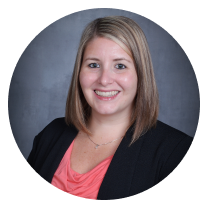
Amber Shanley
Director of Branch Services
She has been working in the branch network since she came to Affinity Plus in 2009. Her passion is helping employees and member achieve their goals. Amber is committed to empowering underserved communities through financial services, education, and advocacy. Amber enjoys spending time as “Auntie Amber” with her many nieces and nephews, and catching sports events while exploring landmarks and cities across the US.